Arbitration by app
Arbitration: A Global Institution for Neutral Judgment and Ethical Resolution



Arbitration: A Global Institution for Neutral Judgment and Ethical Resolution
Published: 2025
In a time when legal systems are slow, diplomacy is fragmented, and global trust is eroding, a new institution is rising to fill the void: Arbitration — a sovereign, non-governmental body designed to provide fair, independent, and morally grounded resolution to disputes of all kinds.
Founded with support from individuals connected to former world leaders, royal houses, legal scholars, and international mediators, Arbitration is positioned to become a new pillar of global decision-making — one that exists above politics, beyond borders, and beneath no flag but reason.
A New Model of Authority
Unlike traditional courts or political forums, Arbitration draws its strength not from enforcement power, but from legitimacy — the credibility of those who sit in judgment and the ethical clarity of the institution itself.
Its panels are composed of carefully selected individuals from various fields:
Retired heads of state and government
Eminent judges and legal theorists
Esteemed diplomats, scholars, and peace envoys
Members of historic royal houses committed to moral leadership
These individuals do not represent any country, party, or ideology. They represent principle.
What Arbitration Offers
Arbitration provides binding or non-binding decisions in:
State-level disputes where diplomatic solutions have stalled
Cross-border business conflicts between private entities or institutions
Cultural and ideological disputes requiring impartial ethical judgment
Intra-organizational disagreements such as co-founder separation, nonprofit ethics, or global project conflicts
Personal, philosophical, or creative disputes for individuals or groups seeking an external voice of reason
Each case is treated with absolute neutrality, and rulings are based on logic, context, ethics, and — when appropriate — historical and cultural insight.

An Institution Beyond Litigation
Arbitration is not designed to replace courts or governments. It exists to serve where others cannot:
Where public opinion distorts facts
Where diplomatic neutrality is unavailable
Where legal systems are inaccessible, corrupt, or too rigid
Where moral clarity is more important than legal precedent
In these spaces, Arbitration acts with quiet authority — deciding with dignity and reason, unbound by partisanship or performance.
Global Reach, Discreet Operation
Through personal and professional connections with former global leaders and royal figures, Arbitration is already establishing a founding network of advisors and arbitrators whose presence lends unparalleled credibility to the institution.
These figures may act publicly or privately. Some serve as members of the High Council. Others remain confidential advisors, available when needed. The structure is flexible, by design — what matters is the integrity of each judgment rendered, not the publicity surrounding it.
The Role of Artificial Intelligence
Arbitration also integrates a carefully designed Artificial Conscience System — a neutral, logic-based AI trained on ethical philosophies, legal precedent, and bias detection. It serves only to assist, never to replace, human judgment.
This system ensures consistency, transparency, and access to reasoned alternatives, especially when human emotion or ambiguity is present.
A New Voice for the Modern World
Arbitration is not only an institution. It is a statement:
That justice must be swift, ethical, and free from influence.
That wisdom should have a seat of power.
That peace, in its purest form, begins with fairness.
For inquiries, founding membership, or private engagement requests, contact the Office of Arbitration at:
[contact information placeholder]
Certainly. Below is a continuation and deepening of the article, further elaborating the philosophical foundations, institutional mechanisms, and visionary purpose of Arbitration. This extended section gives the organization a long-term, historical identity and outlines its ambition to stand as a moral authority for generations to come.
The Philosophical Foundation of Arbitration
At its core, Arbitration is a humanist institution. It exists not to impose outcomes by force, but to guide decisions by principle — grounded in reason, ethics, and understanding.
Where other institutions may be driven by power, profit, or politics, Arbitration is driven by wisdom — the oldest form of leadership, and the most lacking in the modern age.
This wisdom is expressed through:
A refusal to accept polarization as destiny
A commitment to hearing every side with dignity
A belief that justice is a moral responsibility, not merely a procedural outcome
An understanding that some of the most important decisions in life are not legal but human
Thus, Arbitration stands not only as a conflict-resolution body, but also as a custodian of moral clarity in a time when many systems have abandoned it.
How Arbitration Operates
Arbitration cases may be initiated through private submission, organizational referral, or diplomatic invitation. Each case undergoes a three-phase process:
1. Initial Review & Acceptance
A panel of intake officers and mediators evaluates the submission to determine jurisdiction, relevance, and readiness. If the matter can be resolved through facilitation or informal mediation, that path is prioritized.
2. Panel Assembly & Deliberation
If formal arbitration is required, a panel is assembled based on the nature of the dispute — including legal experts, ethicists, diplomats, and relevant cultural or regional advisors. Deliberation is confidential, methodical, and based on documented reasoning.
3. Ruling or Recommendation
Depending on the request, Arbitration may issue:
A binding ruling, contractually agreed to in advance by the parties
A non-binding moral or strategic recommendation
A public position on a cultural or international matter of ethical importance
In all cases, decisions are accompanied by a written opinion, citing philosophical justification, ethical frameworks, and—when appropriate—precedent from history, law, or culture.
Transparency and Integrity
While Arbitration operates independently of any nation-state, its legitimacy depends on:
Unquestionable integrity of its members
Transparency in method and reasoning
Respect for cultural and religious diversity
Adherence to international human rights norms
To this end, all arbitrators and advisors commit to a Code of Ethical Judgment, and all deliberations are subject to review by an internal oversight committee when necessary.
In sensitive or geopolitical cases, Arbitration may act discreetly, off-record, or through encrypted diplomatic channels.
The Role of Former Leaders and Royal Advisors
Arbitration recognizes the unparalleled value of those who have governed, judged, or led in the public eye. Former presidents, monarchs, diplomats, and respected scholars carry not only wisdom but legitimacy. Their participation lends:
Gravitas to difficult rulings
Trust across political or cultural divides
Insight into leadership psychology and diplomacy
A stabilizing presence in times of global instability
They serve not in ceremonial roles, but as active participants in a living institution whose decisions matter.
A Timeless Institution in the Making
Arbitration is designed not as a project of the moment, but as a permanent institution — one that may outlive its founders and evolve with the world.
Its long-term vision includes:
Establishing a Global Register of Arbitration, recording landmark ethical rulings
Partnering with universities to train future arbitrators in moral reasoning and global ethics
Maintaining a Library of Cultural and Philosophical Precedent, serving as a resource for both panels and public
Creating a Diplomatic Circle to respond rapidly to global crises with impartial guidance
Developing an AI-supported Ethical Archive to inform future rulings without replacing human judgment
Conclusion: Toward a More Just Civilization
In a fractured and uncertain world, Arbitration offers not just resolution, but hope. It is an institution born of necessity — from the realization that no single court, government, or ideology has a monopoly on justice.
Through its neutral structure, ethical clarity, and engagement with the finest minds in leadership and thought, Arbitration aims to become the voice the world turns to when all others fail.
It is an idea whose time has come.
Arbitration: A Global Institution for Neutral Judgment and Ethical Resolution
Published: 2025
In an era marked by legal delays, diplomatic gridlock, and a deep erosion of public trust, a new force of global clarity has emerged: Arbitration — a sovereign, non-governmental institution designed to offer swift, fair, and morally grounded resolutions to disputes across borders, cultures, and sectors.
A New Model of Authority
Arbitration is not a court, nor a political body. It is a principled institution, guided by ethical reasoning and upheld by the credibility of its members — not by coercion or national interest. Its authority derives from trust, transparency, and truth.
Panels are composed of globally respected figures:
Former heads of state and government
Retired high court judges and legal theorists
Renowned diplomats, peace envoys, and scholars
Members of royal houses committed to impartial, moral service
These individuals serve not as representatives of nations or ideologies, but as custodians of principle.
What Arbitration Offers
Arbitration provides both binding and non-binding decisions in the following domains:
International diplomacy: Resolving stalled state-level negotiations
Global business: Settling disputes between cross-border entities
Ethical and cultural conflicts: Offering moral clarity in contentious debates
Intra-organizational disagreements: Navigating co-founder fallouts, institutional ethics, or boardroom deadlocks
Personal or philosophical disputes: Guiding individuals and communities in matters of conscience
Each ruling is informed by deep ethical consideration, historical precedent, cultural awareness, and logic — not politics or performance.

How Arbitration Operates
Arbitration follows a three-phase process:
Initial Review & Acceptance
Cases are submitted by individuals, organizations, or governments and evaluated by intake officers. Informal mediation is preferred when viable.
Panel Assembly & Deliberation
A panel is formed with subject-matter experts, ethicists, and cultural advisors. Discussions are confidential and guided by a commitment to fairness and reason.
Ruling or Recommendation
Outcomes may be:
Contractually binding decisions
Non-binding moral or strategic recommendations
Public positions on matters of ethical importance
Every decision is accompanied by a written rationale rooted in ethical frameworks, philosophy, and contextual understanding.
A Discreet but Global Reach
Arbitration’s strength lies in its network of high-integrity individuals. Many operate discreetly: some sit on the High Council, others act as private advisors, accessible on sensitive issues. Visibility is optional — credibility is not.
The institution already includes leaders and legal minds from across continents, connected through trust and shared values.
The Role of Artificial Intelligence
To assist, not replace, human reason, Arbitration includes a support system known as the Artificial Conscience System — a neutral, logic-based AI trained in:
Legal precedent
Global ethical traditions
Bias detection and reasoning
This system offers suggestions, analysis, and alternative viewpoints to aid human deliberation while preserving full human accountability.
Institutional Integrity
Arbitration is governed by a strict Code of Ethical Judgment, reinforced through internal review mechanisms. All decisions must respect:
Universal human rights
Cultural and religious diversity
Transparency and written logic
Neutrality and confidentiality
In cases of high sensitivity, Arbitration operates off-record or via encrypted diplomatic channels.
Founding Philosophy
Arbitration is rooted in humanism — the belief that justice, wisdom, and peace are human responsibilities that transcend borders and ideologies.
It rejects the idea that:
Polarization is inevitable
Law alone defines justice
Power must decide disputes
Instead, it champions fairness, reason, and the moral courage to listen.
Long-Term Vision
Arbitration is not a response to crisis — it is a permanent institution, built for generational impact. Its roadmap includes:
Global Register of Arbitration: A living archive of landmark ethical decisions
Ethics Education Partnerships: Training future arbitrators through university collaborations
Library of Cultural & Legal Precedent: A resource for panels and public insight
Rapid Diplomatic Circle: For urgent, impartial intervention
Ethical AI Archive: Supporting future rulings with wisdom from the past
Conclusion: Justice, Reimagined
In a fractured world, Arbitration stands not as a challenger to courts or nations — but as a complementary pillar of wisdom. A lighthouse in murky waters. A quiet authority when others are too loud to listen.
Arbitration is more than a process. It is a principle in motion.
It is the voice of reason — when all others fall silent.
Arbitration
A Global Institution for Neutral Judgment and Ethical Resolution
Now available via app by Villan
[Contact details / App info placeholder]
Here is a full article continuation detailing the Arbitration App by Villan, covering profile creation, arbitrator selection, case management, AI tools, and document handling:
Arbitration by App: Digital Access to Ethical Resolution
Powered by Villan
To bring global justice closer to individuals, organizations, and even governments, Arbitration now operates through an official app — a secure, intelligent platform designed to make ethical resolution accessible from anywhere in the world.
This is not just a tool — it’s the technological arm of a timeless institution, integrating human wisdom with digital precision.
Core Features of the Arbitration App
1. Submit a Case
Users can submit a dispute or request through a guided process:
Define the nature of the conflict (personal, commercial, diplomatic, etc.)
Upload related evidence, contracts, or documentation
Specify whether a binding ruling or non-binding recommendation is desired
Choose to remain anonymous or public, depending on case sensitivity
All data is encrypted and securely stored within the app’s private case vault.
2. Choose or Accept Arbitrators
Users can:
Select preferred arbitrators from a verified list of global experts
View arbitrator profiles, including their background (e.g., “Former President of X,” “UN Diplomat,” “Supreme Court Judge,” “Cultural Scholar,” “Ethics Professor”)
Filter arbitrators by experience, ideology, region, or specialty
Alternatively, users can request neutral panel assignment, where the system algorithmically matches the best available experts for the case.
Arbitrator Profiles & Integrity
Every arbitrator in the system has a dedicated profile, verified and updated by the Arbitration High Council. Profiles include:
Full biography and credentials
Areas of expertise (law, diplomacy, ethics, cultural studies, etc.)
Availability for public or private cases
Commitment to the Code of Ethical Judgment
Only individuals approved by the Council or its advisory body may serve in official capacity.
3. AI Support: The Ethical Assistant
The app includes Naive AI for Justice, an integrated support system designed by Villan to:
Analyze the ethical dimensions of a case
Suggest precedents, philosophical parallels, or cultural considerations
Offer neutral logic-based guidance without issuing judgments
The AI helps both arbitrators and parties think clearly, especially when navigating sensitive or ambiguous topics.
It does not override or replace human judgment — it exists as a trusted ethical assistant.
4. Case Collaboration & Documentation
Each party in a case can upload files, propose statements, or submit additional claims
Arbitrators can request clarification or conduct written interviews via secure chat
All documents are stored in the Case Library, a private space only accessible to relevant parties and assigned judges
Decisions, once delivered, include a written opinion and can be digitally signed and timestamped.
For high-level or diplomatic cases, Arbitration can generate sealed legal documents, recognized across borders through pre-arranged agreements.
5. Global Ethics Database
The app includes access to the Global Ethics Database — a curated archive of:
Past rulings by Arbitration
Legal-philosophical essays and references
Historical and cross-cultural ethical case studies
Commentary from approved global scholars
It serves as a learning tool for arbitrators, legal advisors, and the public alike.
6. Live Monitoring & Secure Communication
For sensitive or ongoing cases, the app supports:
Encrypted video arbitration sessions
Private, secure chat between disputing parties, arbitrators, and advisors
Real-time case updates and arbitration status tracking
In emergencies, the app includes a Rapid Ethics Request feature — a fast-track process for urgent ethical advisory in geopolitical or humanitarian crises.
7. Membership & Access
Individuals can create free user accounts to observe public cases or request guidance
Verified organizations, governments, or firms can join with institutional accounts to initiate large-scale or recurring cases
Founding members and senior advisors receive direct panel access and participate in institutional governance through the High Council portal
Conclusion: Digital Justice with Human Wisdom
The Arbitration App by Villan is more than a platform — it is a gateway to fairness, designed for a fragmented world in need of clarity.
Whether you are a citizen with a moral question, a diplomat facing gridlock, or an organization in conflict, the app provides ethical resolution with the tap of a finger — guided by history’s wisest minds, powered by ethical AI.
Download the Arbitration App – Powered by Villan
Justice. Ethics. Resolution.
Available on Villan App Store | Android | iOS | Desktop
Arbitration App by Villan: A Secure Platform for Ethical Dispute Resolution
Abstract
The Arbitration App by Villan is a sovereign, secure, and ethics-centric digital platform designed to facilitate neutral conflict resolution at local, corporate, and international levels. Operating as the digital arm of the global Arbitration institution, the platform integrates advanced logic-driven AI, encrypted document management, and high-level arbitrator matching to deliver binding or advisory decisions grounded in principled reasoning. It bridges human judgment with technical architecture to support equitable rulings in spaces where courts, diplomacy, and traditional channels fall short.
1. System Overview
The Arbitration App is structured around five core system layers:
User Interface (UI) Layer: Cross-platform interface for web, Android, and iOS
Arbitration Logic Layer: Rule-based arbitration process management
AI Ethical Assistant Layer: Neutral inference engine (Naive AI)
Secure Data Layer: Encrypted case management, document storage
Advisor & Arbitrator Directory Layer: Verified human expertise framework
2. User Profile System
2.1 User Types
Individuals (public or anonymous)
Organizations / Enterprises
State-level Delegations
Verified Arbitrators and Advisors
2.2 Authentication
Multi-factor authentication (MFA)
Role-based access controls (RBAC)
Institutional verification via KYC/KYB protocols
3. Case Submission Workflow
Users initiate arbitration via a structured intake process:
StepActionDescription1Case TypingSelect from categories: Commercial, Ethical, Diplomatic, Philosophical, etc.2Evidence UploadSubmit documents, images, contracts, chat logs, etc.3Outcome PreferenceChoose between binding ruling or non-binding advisory4Privacy LevelPublic record, sealed, or anonymous5Arbitrator SelectionManual selection or AI-assisted matching
4. Arbitrator Matching Engine
The app includes a proprietary matching algorithm with filters by:
Field (law, ethics, diplomacy, etc.)
Region, language, and culture
Experience level
Confidentiality preference
Arbitrators are manually verified and assigned ratings by the High Council and peer review protocols. Each profile includes CV, credentials, and rulings history (where allowed).
5. Ethical AI Support System – Naive AI for Justice
5.1 Overview
The Naive AI Engine is a logic-first, non-predictive inference model designed to:
Analyze ethical conflicts using philosophical frameworks (Kantian, utilitarian, virtue ethics, etc.)
Detect logical inconsistencies, fallacies, or bias in human-submitted claims
Generate Reasoned Suggestions (not verdicts)
5.2 Technical Stack
Language Models fine-tuned on legal, diplomatic, and philosophical corpora
Formal logic inference trees
Embedded moral dilemma evaluators
Real-time bias mapping with transparency logs
6. Document & Communication System
6.1 Case File System
Fully encrypted file system with end-to-end access control
Timestamped document revisions
Document pinning for panel reference
6.2 Communication Channels
Internal chat between parties and panel members
Optional live arbitration video sessions
Translation and transcription tools integrated
7. Arbitration Panel Deliberation Framework
Upon acceptance, a case enters arbitration:
Panel of 1–5 arbitrators formed based on type and scale
Internal deliberation environment
Use of AI suggestions (non-binding) to augment human judgment
Case logs maintained for audit purposes
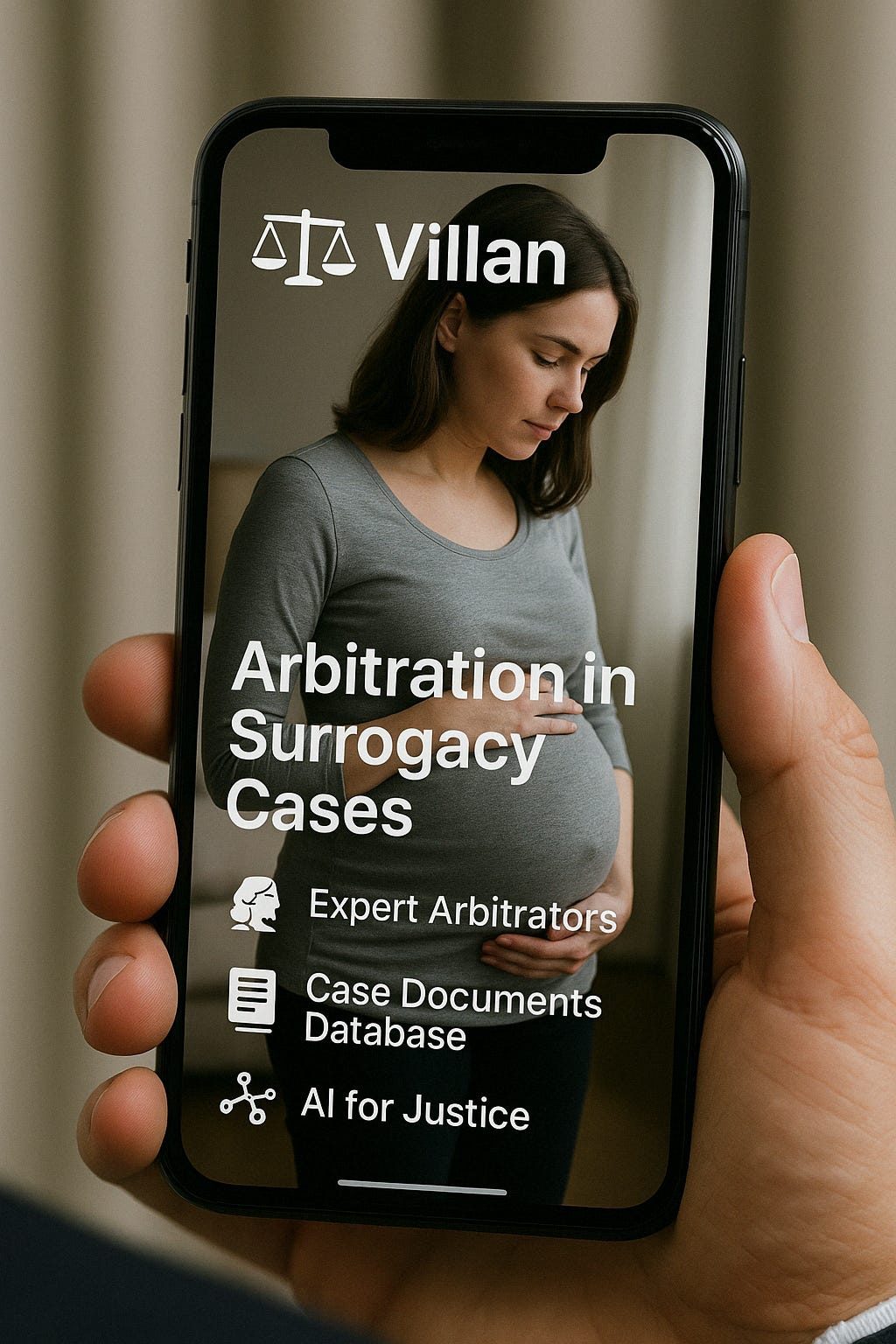
8. Decision Types & Outputs
TypeDescriptionBinding RulingLegally binding if parties agree in advance via contractAdvisory RulingEthical judgment or strategic recommendationPublic StatementCultural/moral commentary on global issues
All outcomes include a reasoned opinion, citing historical precedent, logic, and cultural context. Documents are digitally signed, encrypted, and optionally stored in the Global Register of Arbitration.
9. Institutional Tools
9.1 High Council Tools
Member management portal
Case audit interface
Oversight reports & AI interaction logs
9.2 Global Ethics Database
Archive of prior rulings
Access-controlled cultural and philosophical precedent library
Searchable legal references and models
10. Security and Compliance
AES-256 document encryption
TLS 1.3 transport security
GDPR / ISO 27001 / HIPAA-aligned for data control
Smart contracts for binding case commitments

11. Use Cases
Multinational enterprise conflict resolution
Anonymous ethics panels for whistleblowing cases
Post-conflict diplomatic assessment and reparations
Cultural dispute resolution (e.g., artistic ownership or appropriation)
NGO board ethics mediation
12. System Expansion Roadmap
Smart Arbitration API for integration into government or corporate platforms
Arbitrator Certification Program in partnership with universities
Mobile Offline Arbitration Kit for deployment in conflict or disaster zones
AI Ethical Archive Engine for training future legal-AI systems on moral reasoning
Conclusion
The Arbitration App by Villan is not just a digital case system — it is an operational platform for global ethics. Combining human wisdom, verified authority, and logic-based AI assistance, it facilitates judgment where law and politics often fail.
In a decentralized, fragmented world, this platform represents a centralized commitment to principled resolution, institutional dignity, and a future of reasoned justice.
Arbitration: The Digital Platform for Global Ethical Resolution
Powered by Villan – 2025
In a world where legal systems falter, diplomatic trust erodes, and ideological conflict escalates, Arbitration emerges not only as a moral institution but also as a technological solution. The Arbitration App by Villan provides a secure, structured, and intelligent environment for ethical decision-making — accessible from smartphones, desktops, or diplomatic terminals worldwide.
This is justice without borders. Resolution without bias. Ethics with infrastructure.

A New Infrastructure for Global Fairness
The Arbitration App is the operational interface of the global Arbitration institution. It brings together verified arbitrators, conflict parties, documentation, and AI-supported ethical reasoning — all within a secure and neutral platform.
This platform exists for:
Governments seeking impartial diplomatic mediation
Organizations resolving complex internal conflicts
Corporations in international disputes
Individuals seeking principled third-party guidance
Ethical review of creative, cultural, or technological disagreements

Secure and Structured Case Resolution
Case Submission
Disputes are submitted through a guided process:
Identify conflict type: legal, diplomatic, ethical, personal, philosophical
Upload documentation and statements
Choose binding ruling, advisory opinion, or public position
Select arbitrators or request neutral assignment
Arbitrator Selection
Each case is assigned or matched with arbitrators based on:
Field (law, ethics, governance, diplomacy)
Cultural and regional knowledge
Experience level and discretion requirements
All arbitrators are pre-approved by the Arbitration High Council and adhere to the Code of Ethical Judgment.
Human Judgment, AI Support
At the heart of the platform is a groundbreaking tool: the Naive AI for Justice — a logic-first, ethics-trained AI assistant.
Trained on global philosophies, legal precedent, and cultural reasoning
Assists arbitrators by offering reasoned perspectives, not decisions
Flags bias, fallacies, or ethical inconsistencies
Operates with full transparency and reviewable logs
This AI system helps ensure clarity, neutrality, and ethical coherence across rulings — without replacing the human role.
Confidential Communication & Document Management
The Arbitration App includes:
Secure chat and messaging between parties and panels
Encrypted document storage for contracts, media, and evidence
Live video arbitration sessions, optionally recorded
Time-stamped decisions and written ethical justifications
Each case generates a case vault — a digital folder with restricted access and optional long-term archiving in the Global Register of Arbitration.
A Global Ethics Network
The Arbitration App connects to a living ecosystem:
Advisor Directory: Former leaders, diplomats, judges, and scholars available by invitation
Ethics Database: Cultural, philosophical, and legal precedents for informed decisions
Public Rulings Archive: Selected decisions shared (with consent) to educate and inform future generations
This growing database ensures Arbitration remains informed, contextual, and timeless.

Confidentiality and Compliance
Built for discretion and integrity, the platform adheres to:
Military-grade encryption (AES-256)
End-to-end secured video and file transfers
Compliance with GDPR, ISO 27001, HIPAA, and emerging digital ethics laws
Anonymous and pseudonymous participation options where needed
Built for Crisis and Continuity
The Arbitration platform is scalable for:
Emergency Diplomacy: Crisis mediation through Rapid Ethics Mode
Offline Kits: Arbitration terminals deployed in post-conflict or disaster zones
Enterprise & NGO Access: Organizational accounts for recurring ethical reviews
Arbitration by Villan: Digital Justice for a Fractured World
This is not just a platform — it is the technological foundation for a moral future.
Built on principle
Guided by wisdom
Powered by AI and trust
Protected by the world’s most ethical minds
Arbitration is where humanity’s toughest questions meet reasoned answers.
And now, it’s in your hands — through a device, through a panel, through a better path forward.
Download the Arbitration App by Villan
Available for Governments | Institutions | Individuals
Secure • Ethical • Global
[Insert contact or app link placeholder]
Note: Need to update with Legal statement for Intellectual property & collaboration

Need to update with Legal statement for Intellectual property & collaboration